




Quick Verdict
 United States
GPT-5 Pros and Cons
Pros
- Exceptional Reasoning and Accuracy: GPT-5 demonstrates PhD-level reasoning capabilities, excelling at complex problems in science, math, and coding. It also boasts a significant reduction in factual errors (hallucinations) compared to its predecessors, making it more reliable for high-stakes tasks.
- Advanced Agentic Capabilities: The model can autonomously plan and execute multi-step tasks using various tools and APIs, enabling full workflow automation (e.g., managing emails, scheduling meetings, and analyzing data without manual switching between apps).
- Unified Multimodality: GPT-5 seamlessly handles and integrates text, code, voice, and images in a single interaction. For example, it can analyze a chart and then write a comprehensive report about the trends it identifies.
- Massive Context Window: With a context window of up to 400,000 tokens, it can process and remember information from extensive documents or entire codebases in one go, allowing for deeper, more context-aware analysis and interaction.
- Superior Coding Performance: Touted as a top-tier coding model, GPT-5 can debug large codebases, generate production-ready code, and perform complex code analysis with a high degree of accuracy, significantly boosting developer productivity.
Cons
- Hallucinations Still Exist: While significantly reduced, GPT-5 is not entirely free from generating incorrect or misleading information. Human oversight and fact-checking remain essential for critical applications.
- High Computational Cost: The power and scale of the model mean that its computational costs can be high, potentially making it less accessible or cost-effective for smaller teams or individual developers compared to smaller, open-source alternatives.
- Potential for Formulaic Creativity: Some users and experts note that while the writing is polished and grammatically perfect, the focus on factual accuracy and safety may sometimes result in a lack of genuine creativity, literary depth, or a "human touch" in its outputs.
- Privacy and Security Risks: Sharing sensitive or proprietary data with the model still carries inherent security and intellectual property risks, requiring robust internal policies and data anonymization practices from businesses.
- Not True AGI: Despite its impressive capabilities, GPT-5 is still a sophisticated pattern recognition tool, not a form of artificial general intelligence (AGI). It lacks true human-like comprehension, common sense, and emotional intelligence, meaning it cannot make independent decisions in novel situations without human guidance.
Key Takeaways
- PhD-Level Reasoning: GPT-5 has significantly enhanced logical and multi-step reasoning capabilities, scoring highly on advanced academic and math benchmarks, making it a powerful tool for complex problem-solving.
- Unified Multimodality: The model seamlessly integrates and processes text, code, voice, and image inputs and outputs in a single interaction, enabling rich, dynamic applications like generating an app from an image prompt.
- Superior Coding Performance: Touted as OpenAI's "strongest coding model to date," it excels at generating production-ready code, debugging large codebases, and planning agentic workflows with high accuracy.
- Significant Reduction in Hallucinations: Through new training methods, the model's factual error rate has been reduced by more than 75% compared to previous models, making its outputs more trustworthy for high-stakes enterprise use cases.
- Agentic Capabilities: GPT-5 is built for autonomy, capable of planning and executing multi-step tasks using various tools without continuous human input, which is key for end-to-end workflow automation.
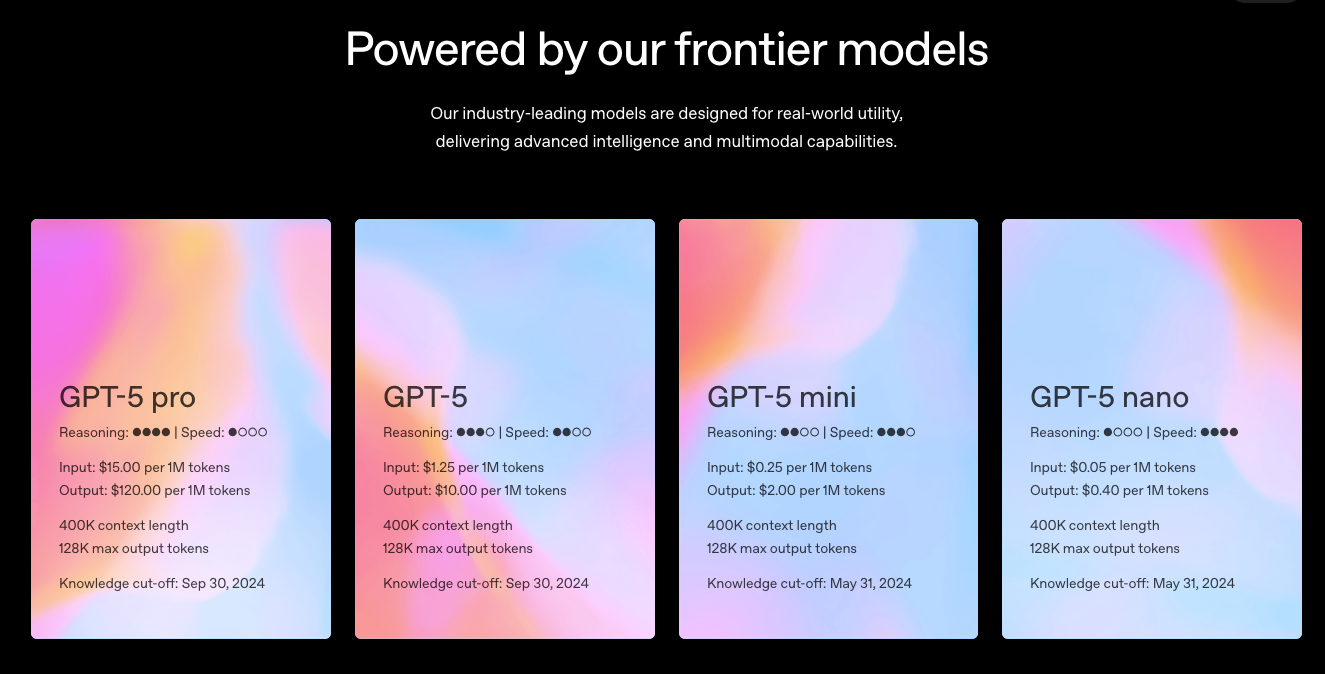
- Dynamic Model Routing: The system automatically selects the optimal underlying model variant (Nano, Mini, Pro) based on the task's complexity, ensuring a balance of speed, cost, and quality without the user needing to intervene.
- Massive Context Window: It can handle an expansive 400,000-token context window, allowing it to process entire documents, books, or codebases for deeply context-aware responses.
- Enhanced Safety and Steerability: The model is qualitatively safer, more resistant to "jailbreaks," and offers improved controls like the "reasoning effort" and "verbosity" parameters for greater developer control over outputs.
What is GPT-5?
How does GPT-5 work?
- Intelligent Routing: When a user submits a prompt (text, image, or voice), the system’s router evaluates the request. Simple queries are handled by a fast, efficient model (like GPT-5 Nano or Mini) for quick responses, while complex, multi-step problems are automatically escalated to the deeper, more resource-intensive GPT-5 or Pro models. This ensures an optimal balance of speed, cost, and accuracy without the user needing to manually select a model.
- Enhanced Reasoning: The core of GPT-5’s advancement is its improved “thinking” capability, or Test-Time Compute (TTC). For harder problems, the model is allocated more computational power and explicitly breaks down the task, checks its own logic, and explores multiple reasoning paths simultaneously before merging the best results into a final, highly refined answer. This is an integrated Chain-of-Thought (CoT) process, which significantly reduces factual errors and boosts performance on complex logic puzzles and PhD-level science questions.
- Multimodal Integration: GPT-5 can seamlessly process and interrelate different data types, like analyzing a financial chart image and then generating a textual report. The model’s architecture integrates these inputs directly, allowing for a unified understanding and generation process.
- Agentic Workflows: GPT-5 is trained for agentic applications, meaning it can autonomously plan and execute a series of actions (like using various software tools, debugging code, or browsing the web) to achieve an end goal. It can provide user-visible “preamble” messages to communicate its plan and progress, making the execution transparent and auditable.
- Massive Context Window: The model has a substantial context length (up to 400,000 tokens), enabling it to process entire codebases, large datasets, or extensive documents in a single interaction, allowing for deeper context-aware decisions and improved instruction following.
How to use GPT-5?
Step-by-Step Guide to Using GPT-5
Step 1: Access the Platform
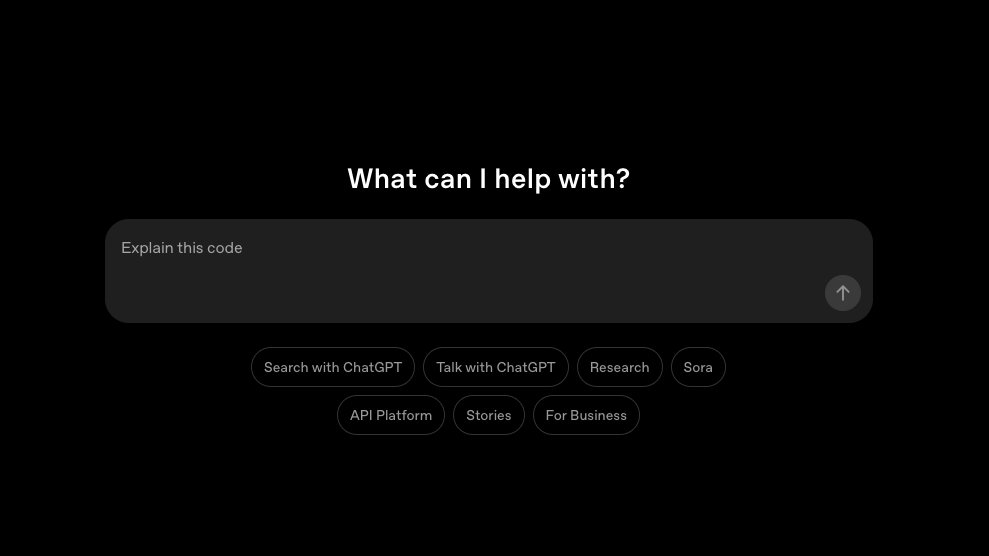
Go to the official OpenAI website (chat.openai.com) and sign up for an account. You can choose a free plan to start, which provides significant access to GPT-5’s core features. Once registered and logged in, you will be in the main chat interface.
Step 2: Enter Your Prompt
In the text box at the bottom of the screen, type your request, known as a “prompt”.
- For simple tasks (e.g., “Write an email announcing a team meeting”), be direct. The AI’s internal router will use a fast, efficient model (like GPT-5 Nano) to give you a quick answer.
- For complex tasks (e.g., “Analyze this dataset and provide a 5-page report”), provide detailed instructions and context. The system will automatically switch to a more powerful model (like GPT-5 Thinking or Pro) and dedicate more computational effort to solving it accurately.
Step 3: Leverage Multimodal Inputs
You are not limited to text. You can upload images, code snippets, or other files.
- Example: Upload a picture of a flowchart and ask, “Explain this workflow step-by-step.”
- Example: Paste a block of code and ask, “Find the bug in this Python script and explain the fix.”
Step 4: Refine and Iterate
The first answer is a starting point. If you want a different style, more detail, or a different format (like a table or a bulleted list), simply ask in a follow-up message. The model remembers the entire conversation context, so you can refine the output iteratively.
Step 5: Utilize Advanced Features (Optional)
For specific needs, you can explore settings to:
- Adjust tone and style: Ask it to “Respond as a formal business analyst” or “Keep it concise and friendly”.
- Enable Agentic Workflows: For complex, multi-step projects, GPT-5 can plan and execute a series of actions (e.g., “Research top marketing trends, draft a social media campaign, and schedule the posts”).
GPT-5 Pricing
GPT-5 Consumer Plans
| Plan |
|---|
| Pricing | Key Features & Access | |
|---|---|---|
| Free | $0/month | Access to the base GPT-5 model (using internal Nano/Mini variants for speed). Includes core functionalities like basic text generation, multimodal inputs (images, voice), and web browsing, but may experience dynamic usage limits and slower speeds during peak hours. |
| ChatGPT Plus | ~$20/month | Offers “expanded” usage allowances and priority access to the standard GPT-5 model. Users benefit from faster response times, the advanced voice mode (direct speech processing), and improved image generation capabilities. It provides a higher message limit before potentially facing dynamic caps. |
| ChatGPT Pro | ~$200/month | The top-tier individual plan providing unlimited access to all GPT-5 models, including the specialized GPT-5 Pro model. This tier is designed for power users, researchers, and developers, offering maximum reasoning depth, higher performance for complex tasks, significantly larger file processing, and more extensive context windows without hitting usage limits. |
Key Differences:
- Model Access: While all users get access to the GPT-5 system, only Pro users can access the absolute smartest, most resource-intensive GPT-5 Pro model variants on demand for demanding tasks.
- Speed and Reliability: Paid plans, especially Plus and Pro, offer prioritized processing and faster, more consistent response times, which is crucial for time-sensitive tasks. The free tier might be slower when demand is high.
- Usage Limits: The free plan has dynamic, potentially strict, usage limits, whereas Plus has expanded limits, and the Pro plan offers functionally unlimited use for individual tasks.
- Specialized Tools: Plus and Pro plans generally offer better integration and higher limits for advanced tools like image/video generation (Sora) and data analysis features.
In certain regions like India, OpenAI also offers a more affordable plan called ChatGPT Go priced at around ₹399 per month, which provides an intermediate option with higher limits than the free tier, tailored to local market conditions.
GPT-5 API Pricing Structure (Per 1 Million Tokens)
| Input Price (per 1M tokens) | Output Price (per 1M tokens) | Best For | |
|---|---|---|---|
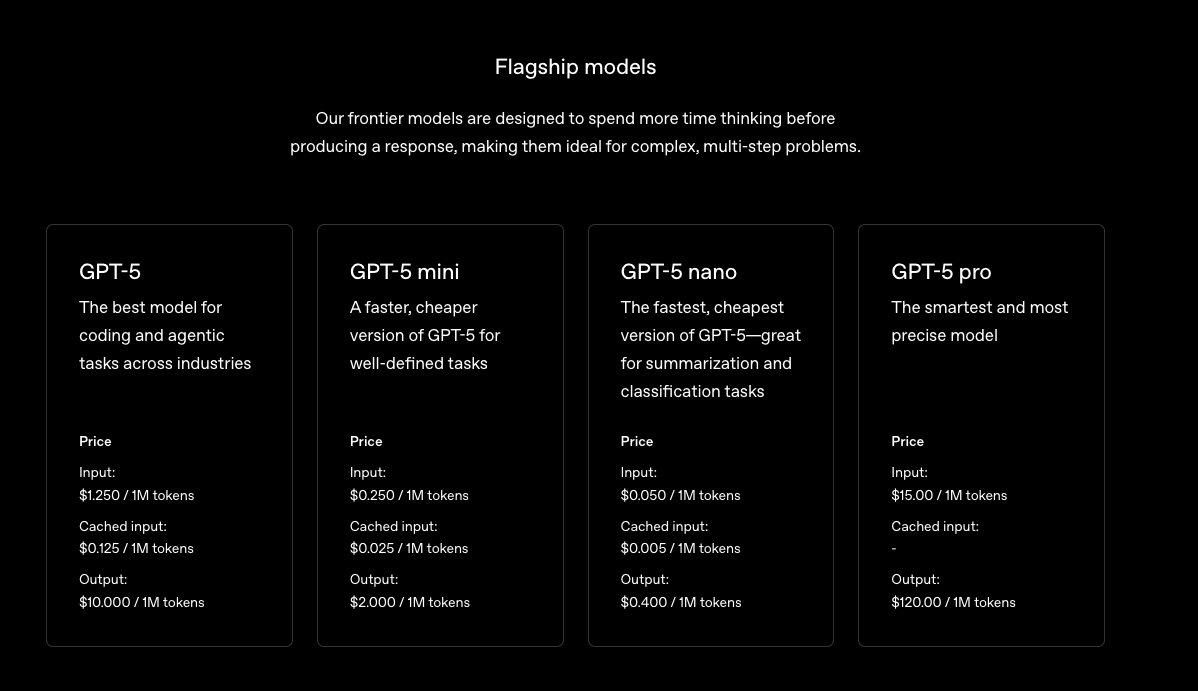
GPT-5 nano | $0.05 | $0.40 | Fastest, great for summarization and classification |
GPT-5 mini | $0.25 | $2.00 | Affordable general use, production workhorse |
GPT-5 (full) | $1.25 | $10.00 | Coding, agentic tasks, and premium quality results |
GPT-5 Pro | $15.00 | $120.00 | Smartest, most precise model for complex, high-stakes problems |
Key Details and Cost Optimization
- Token Explanation: Tokens are the building blocks of text. Roughly, 1 million tokens equate to about 750,000 words. You pay for both what you send in and what the model generates.
- Cached Inputs: If your application sends the same or very similar prompts repeatedly (e.g., system instructions), OpenAI offers a 90% discount on “cached” input tokens, significantly reducing costs for repetitive tasks.
- Batch API Discount: For non-time-sensitive, bulk processing of requests, you can use the Batch API to receive a 50% discount on processing costs.
- Multimodal Pricing: Handling image and audio inputs has its own pricing structure, with costs varying based on the quality and size of the media file.
- Enterprise/Scale Tiers: Large organizations can opt for custom enterprise pricing or the “Scale Tier” to purchase guaranteed capacity, access custom SLAs (Service Level Agreements) with up to 99.99% uptime, and benefit from no rate limits.
Frequently Asked Questions
1. What is GPT-5 and how is it different from GPT-4o?
GPT-5 is OpenAI's most advanced AI model to date, surpassing its predecessors with "PhD-level" reasoning capabilities and a significantly lower hallucination rate (reduced by over 75%). It operates as a unified, multimodal system that seamlessly handles text, code, voice, and images, and introduces powerful agentic capabilities for autonomous task completion.
When was GPT-5 released?
GPT-5 was officially launched on August 7, 2025, making it available to all ChatGPT users, including free tiers, via the OpenAI API and platform.
What are the key improvements in GPT-5 over previous models?
It features a 256,000-token context window for better memory, 6x fewer hallucinations, superior performance in coding (144% better than GPT-4o), health queries, writing, and tool integration, plus faster responses and reduced deception rates.
What are the variants of GPT-5?
GPT-5 comes in four variants: the full GPT-5 for complex tasks, GPT-5-mini for balanced efficiency, GPT-5-nano for low-latency needs, and GPT-5-chat optimized for conversational use, all accessible via API.
How can I access GPT-5?
It’s the default model in ChatGPT for free and paid users (replacing GPT-4o). Developers can use it through the OpenAI API, with variants tailored for different workloads; no additional setup needed for basic access.
Is GPT-5 safe to use for sensitive topics like health?
Yes, it excels in health-related benchmarks with substantial accuracy gains and low hallucination rates, but it’s a supportive tool, not a replacement for professional medical advice.
What are some real-world applications of GPT-5?
It powers custom app/website creation from single prompts, automates multi-step workflows, enhances coding/debugging, and aids in detailed analysis for finance, science, and creative design with aesthetic intuition.
Conclusion
GPT-5, launched on August 7, 2025, marks a significant leap in AI capabilities, redefining how users interact with technology. Its multimodal prowess—handling text, voice, images, and video—combined with a 256,000-token context window, ensures unparalleled memory and precision. With a 6x reduction in hallucinations and a 144% improvement in coding over GPT-4o, it delivers reliable, high-quality outputs across domains like health, finance, and creative design. The four variants (full, mini, nano, and chat) cater to diverse needs, from complex tasks to low-latency chats, making it accessible via the OpenAI API and ChatGPT platform for both free and paid users. Its agentic autonomy empowers seamless workflow automation and custom app creation, transforming productivity for developers and creators. While not a substitute for professional advice, GPT-5’s enhanced reasoning and real-time tool integration make it a versatile, powerful tool, setting a new benchmark for AI-driven innovation and practical application in everyday and specialized tasks.
An Important Note on Responsible AI Use
AI tools are powerful. At Intelladex, we champion the ethical and legal use of this technology. Users are solely responsible for ensuring the content they create does not infringe on copyright, violate privacy rights, or break any applicable laws. We encourage creativity and innovation within the bounds of responsible use.
Ethical & Legal Considerations: The Source of All Generative AI Risks
Large Language Models are the source of all modern generative text capabilities and their associated risks. The issues of factual inaccuracy (“hallucinations”), algorithmic bias, copyright ambiguity, and the potential for misuse in creating harmful or deceptive content are inherent to the technology. The developer or user who implements a foundation model is solely and completely responsible for the ethical implications and the real-world impact of their final application. These models are a raw, powerful technology that requires a profound level of human oversight and a strong ethical framework.

Showcase Your Review
Share Your Intelladex Feature
If you’re a tool owner, build trust and showcase your independent review by placing our official badge on your website.

Embed on Your Site
Simply copy the code below and paste it into an HTML block on your website’s homepage, footer, or “About Us” page.